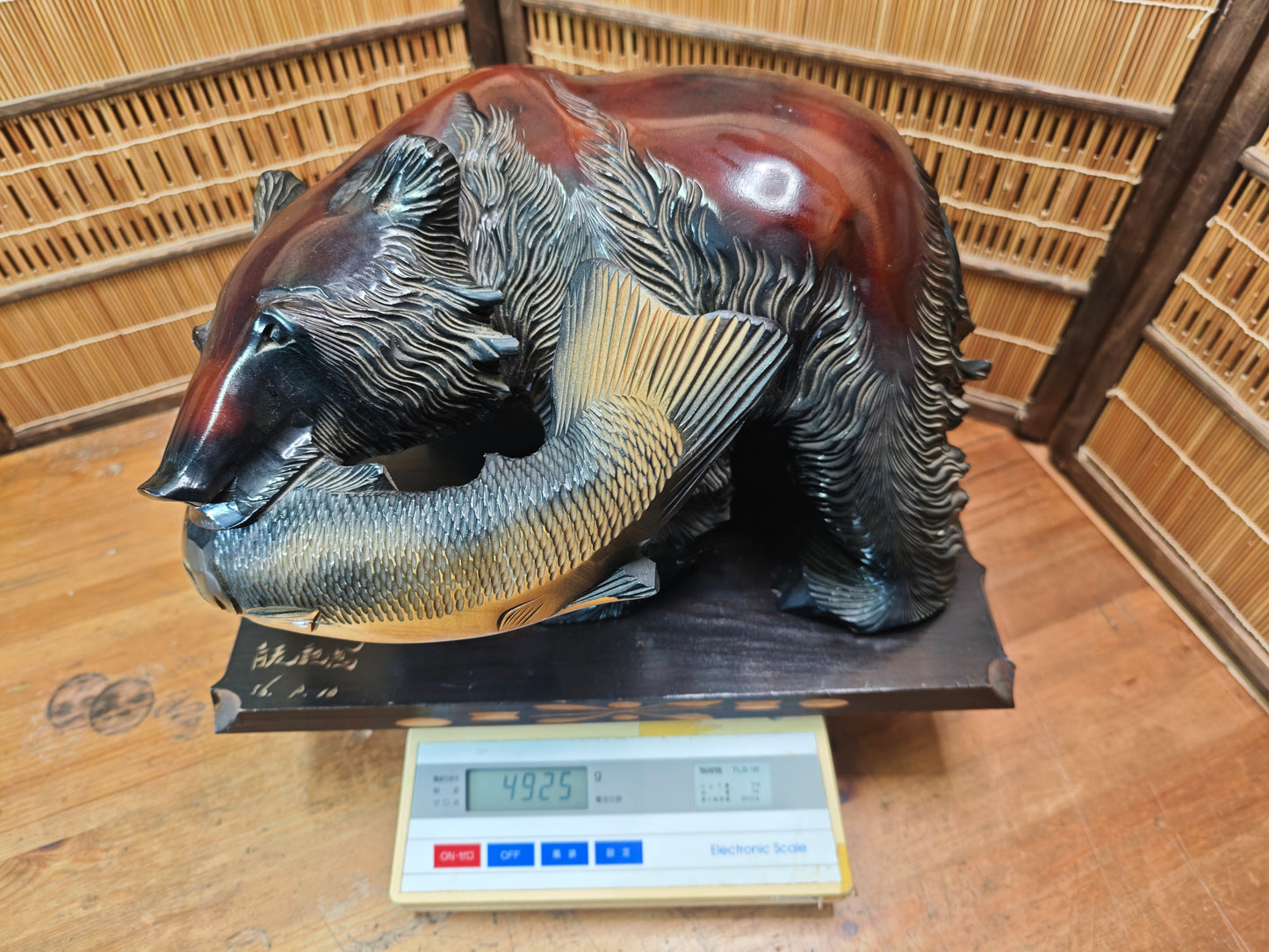
Rare Japanese Kibori Kuma Wooden Bear Showa 56 1981 Hokkaido Carving
Rare Japanese Kibori Kuma Wooden Bear Showa 56 1981 Hokkaido Carving
🐻 Authentic Kibori Kuma – Showa 56 (1981) Hokkaido Folk Art
This is an extremely rare Japanese vintage Kibori Kuma (木彫り熊) — a traditional hand-carved wooden bear originating from Hokkaido, Japan’s northern island. The piece is dated Showa 56 (1981) and was sourced directly from a Japanese Government Auction, guaranteeing authenticity.
Kibori Kuma carvings began in the early 20th century and became one of the most iconic forms of Japanese folk art. Bears represent strength, protection, and harmony with nature, and were originally carved by Hokkaido craftsmen inspired by Ainu culture and alpine life.
Each bear is carved from a solid block of wood using chisels only — no molds, no machines — making every piece completely unique.
✅ Product Highlights
✅ Genuine Kibori Kuma 木彫り熊 from Hokkaido
✅ Dated Showa 56 – 1981
✅ Fully hand-carved solid wood
✅ Sourced from a Japan Government Auction
✅ Beautiful aged patina & expressive carving details
✅ Symbol of strength, protection & good fortune
✅ Perfect for rustic, wabi-sabi & Japanese interiors
✅ Rare collectible folk sculpture rarely found overseas
📐 Approximate Details
Era: 1981 – Showa period
Material: Solid carved wood
Origin: Hokkaido, Japan
Condition: Vintage with natural age wear – enhances character and authenticity
🎎 About Kibori Kuma
Kibori Kuma carvings are one of Japan’s most beloved folk art traditions. Originally sold to travelers visiting hot spring towns in Hokkaido, these bears have now become highly sought-after collectibles — especially dated Showa pieces, which are far harder to find than modern reproductions.
✅ Origin & History:
The carving of bears holds sacred meaning in Ainu culture. The modern form of Kibori Kuma began in Yakumo, Hokkaido, in the early 20th century, inspired by Swiss folk carvings but quickly developed into a uniquely Japanese folk art tradition.
✅ Symbolism:
The bear represents strength, protection, and reverence for nature. Often shown with a salmon in its mouth, it reflects Hokkaido’s wildlife and abundance.
✅ Craftsmanship:
Hand-carved from solid wood in the 1980s, each bear is unique in its pose, details, and finish. This example carries the charm of folk craft artistry, with fine carving lines and expressive details.
✅ Cultural Significance:
Once a common souvenir of Hokkaido, Kibori Kuma carvings have become collectible folk art pieces valued for their history and cultural depth.
📏 Dimensions: (please confirm or I can list as “see photos for exact measurements”).
🎁 A perfect piece for collectors of Japanese folk art, lovers of Ainu culture, or those seeking a rustic, symbolic home décor item.
📢 Important Shipping Policy Update
To ensure safe delivery, we currently ship one item per order only.
Orders with multiple items may be canceled and refunded. Once your item arrives safely, you’re welcome to place another order.
📦 Condition
Please review all photos carefully, as they form part of the item description. Dimensions and additional details are provided in the images.
Couldn't load pickup availability
Low stock: 1 left
View full details